




Optical Fiber Communication Module: The Quiet Backbone of Modern Defense Networks
Optical Fiber Communication Module: The Quiet Backbone of Modern Defense Networks
A closer look at how CloudWing’s Optical Fiber Communication Module delivers low latency, EMI immunity, and stable throughput for radar, EO, and command applications.
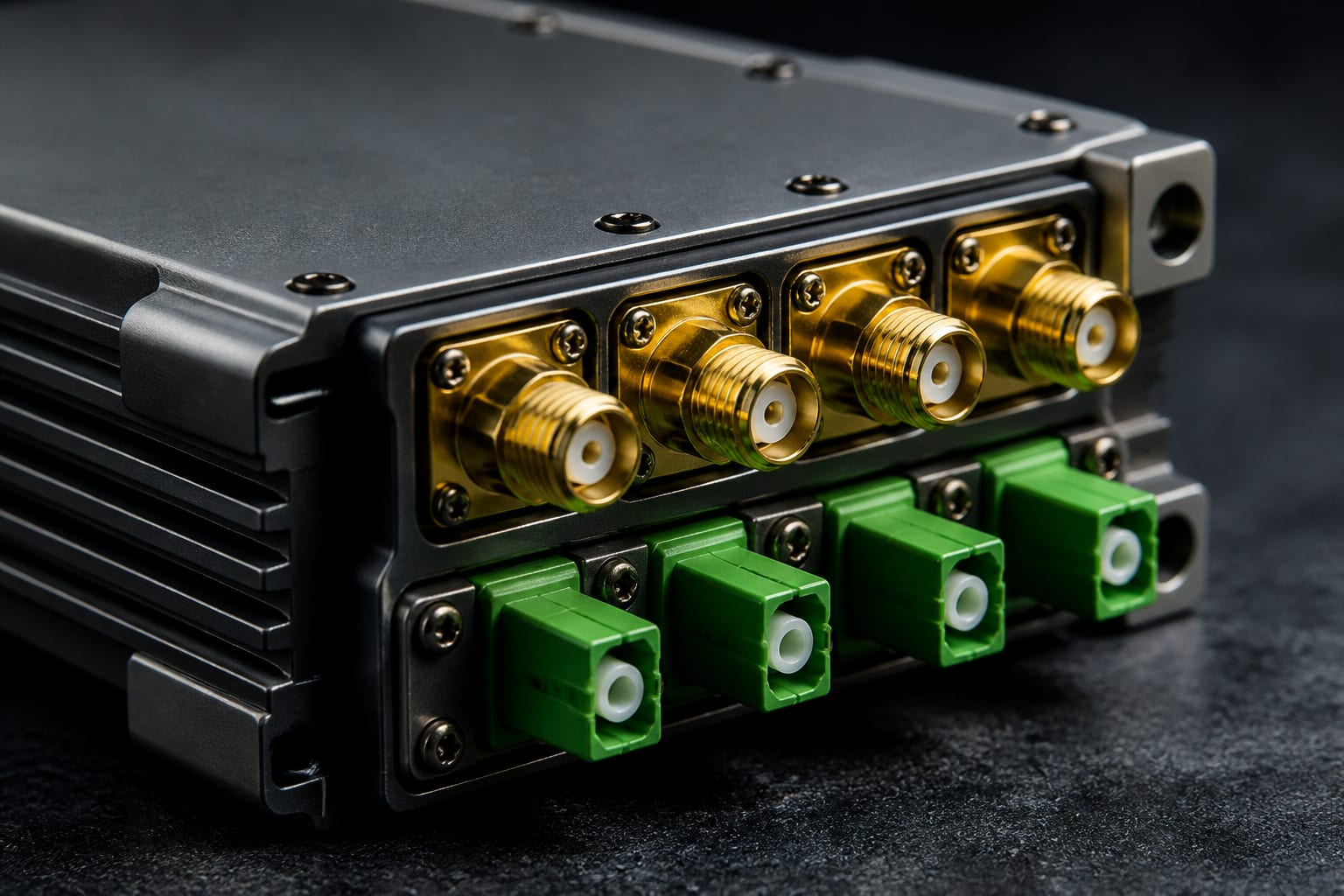
In layered security architectures, cameras and radars get the attention—but the Optical Fiber Communication Module is often what keeps the whole picture coherent. CloudWing Defense designs these modules to move high-bandwidth sensor data with minimal latency and strong immunity to electromagnetic noise, whether the destination is a local shelter display or a fused operations room across the compound.
Traditional copper links can struggle near high-power transmitters, vehicle electronics, or dense RF environments. Ground loops, induced noise, and distance limitations quietly degrade video and track quality until operators lose trust in the system. Fiber sidesteps many of those issues. A well-engineered Fiber Optic Module converts electrical signals into optical signals, carries them across site distances that copper cannot comfortably support, and reconstitutes a clean digital stream at the receiving end.
That conversion step looks simple on a block diagram, yet it determines whether a Phased Array Radar track arrives in time for EO cueing, or whether a jammer workflow stalls waiting for confirmation. CloudWing therefore treats communication modules as timing-critical infrastructure rather than commodity accessories.
Key engineering priorities
- Latency control for real-time tracking and jammer cueing loops
- Link budget margin for longer runs between towers, shelters, and hangars
- Connector robustness for field installation and maintenance cycles
- Interoperability with radar processors, EO gimbals, and C2 software
- Serviceability with clear labeling, spare strategy, and swap guidance

Where the module shows its value
CloudWing’s communication modules are frequently specified alongside phased-array nodes and perimeter EO stations. In those deployments, the optical path becomes the trusted highway between edge sensors and the fused display used by operators. The same design language also helps projects that deploy a Fiber Optic Spool with fiber-optic drones: ground infrastructure and airborne tether segments follow compatible optical practices, reducing training friction for technicians.
Technical teams can request configuration guidance covering wavelength, reach, power budget, and enclosure options. A typical advisory package includes recommended cable types, bend-radius notes, and commissioning checkpoints. For multi-building campuses, CloudWing often proposes segmented links with spare capacity so customers can add cameras or radar nodes later without redesigning the entire backbone.
Bottom line: when decision-makers talk about “seeing farther and acting faster,” a reliable Optical Fiber Communication Module is usually doing quiet, essential work in the background. Investing in that layer early prevents expensive redesigns when the sensor suite inevitably grows.