




Optical Fiber Communication Modules That Keep Multi-Site Networks Coherent
Optical Fiber Communication Modules That Keep Multi-Site Networks Coherent
How CloudWing specifies Optical Fiber Communication Modules for campus, tower, and shelter links—so Fiber Optic Communication stays clean near radar and jammers.
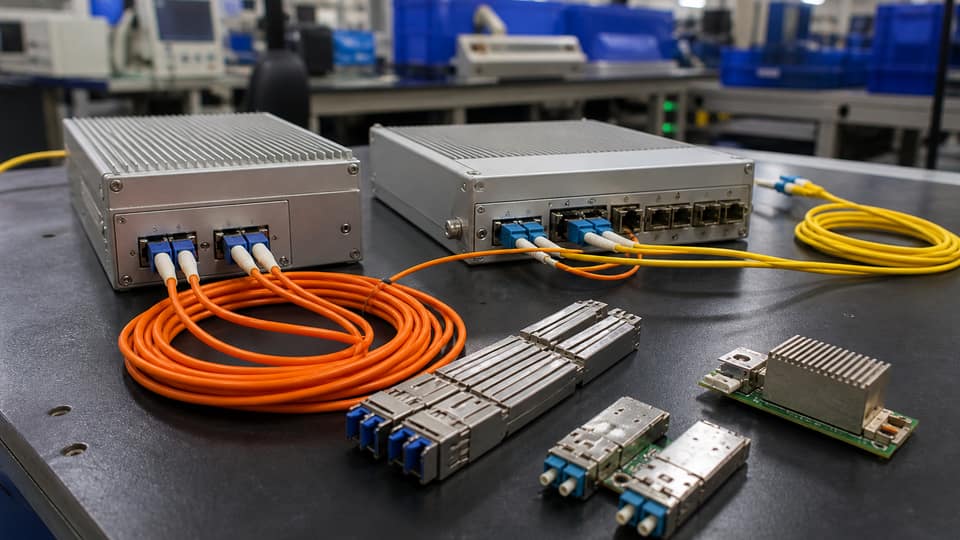
When a security site grows from one mast to a campus, copper quietly becomes the bottleneck. Ground loops, distance limits, and electromagnetic noise start to show up in video and track quality. CloudWing Defense treats Optical Fiber Communication Modules as the layer that keeps those sites coherent: the same optical practice from the tower cabinet to the operations room, even when radars and jammers sit nearby.
Fiber Optic Communication is not a generic networking upgrade. In defense and critical-infrastructure work, the link must carry sensor data with predictable latency, survive outdoor enclosures, and remain serviceable by technicians who are not optical specialists. That is why CloudWing designs Fiber Optic Modules around mission constraints first—reach, EMI surroundings, connector handling, and spare strategy—then maps those constraints to a module family.
A typical multi-building layout uses short runs inside a shelter and longer runs between masts, hangars, and the command floor. Each hop needs margin. If the optical budget is planned only for day-one cameras, the network cannot absorb a later radar node or EO turret without redesign. CloudWing therefore recommends spare capacity in both fiber count and transceiver headroom.
What to specify before you order modules
- Distance and number of hops between sensors and the operations room
- Bandwidth for radar tracks, EO video, and future expansion
- Enclosure type: rack, outdoor box, vehicle shelter, or mast cabinet
- Nearby RF sources that could punish copper but should not punish fiber
- Who will clean, swap, and label the link after commissioning
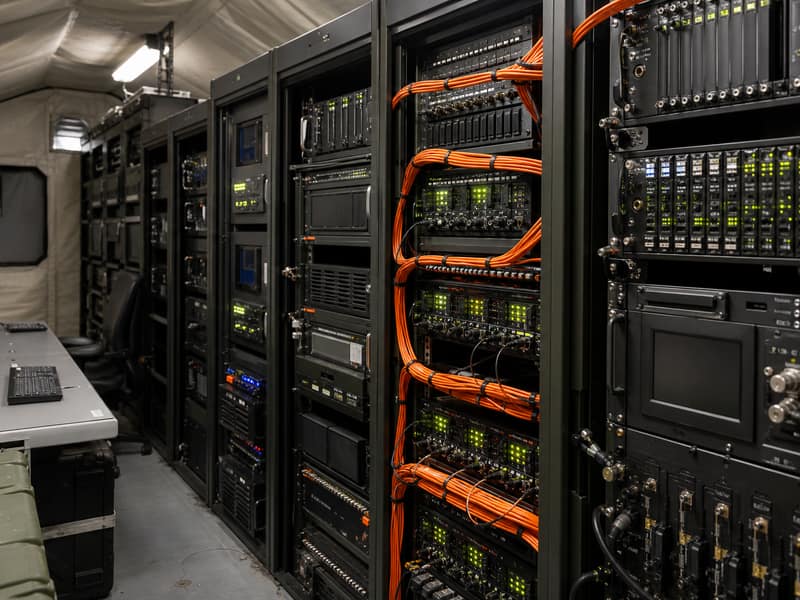
“Buyers often ask for a transceiver part number,” said a CloudWing communications engineer. “We ask what the network must still do in year three. Optical Fiber Communication Modules that only match today’s camera count become a hidden program risk.”
Keeping Fiber Optic Communication maintainable
Field reliability is as much about labeling and bend-radius discipline as it is about laser power. CloudWing ships modules with clear interface notes and recommends a small hot-spare pool for remote sites. Combined with remote commissioning support, that approach shortens restore time when a connector is contaminated or a run is damaged during construction.
For teams already evaluating radar or counter-UAS growth, the practical sequence is simple: freeze the optical backbone early, then add sensors. A stable Fiber Optic Communication layer is what lets later systems share one picture instead of fighting separate cabling plans.