


Fiber Optic Dispenser for UAVs: The Mechanism That Makes the Tether Honest
Fiber Optic Dispenser for UAVs: The Mechanism That Makes the Tether Honest
Smooth payout, protected bend radius, and field-replaceable fiber decide whether a Fiber Optic Dispenser helps the mission or ends it. CloudWing details the engineering.
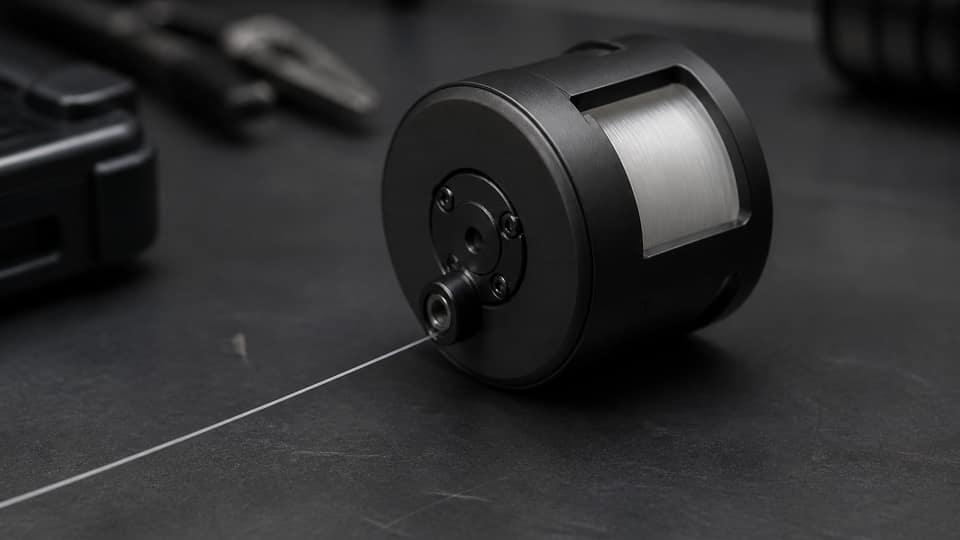
On a fiber-optic unmanned flight, the airframe gets the attention and the dispenser does the work. A Fiber Optic Dispenser must release fiber evenly, avoid sudden snatch loads, protect the minimum bend radius, and survive repeated field handling. If that mechanism chatters or snags, the optical path fails as completely as a lost radio link.
CloudWing Defense treats the Fiber Optic Dispenser for UAVs as a first-class product, not an accessory. Capacity, weight, flange geometry, and payout guides are tuned together. Too little fiber limits the mission. Too much fiber adds bulk and tangle risk if the guides are poorly designed. The right dispenser is the one that matches the flight envelope the customer actually flies.
Because the fiber ends in an optical interface, dispenser engineering shares practices with CloudWing’s module line: cleanliness, strain relief, and connector standards. A pristine UAV cannot compensate for a contaminated or overstressed tether path.
Dispenser checks that belong in every evaluation
- Payout smoothness across temperature and humidity
- Fiber surface protection during fast unreeling
- Mounting on the airframe versus a ground canister, and why
- Retrieval or discard procedure after the mission
- Field access for inspection, cleaning, and fiber replacement
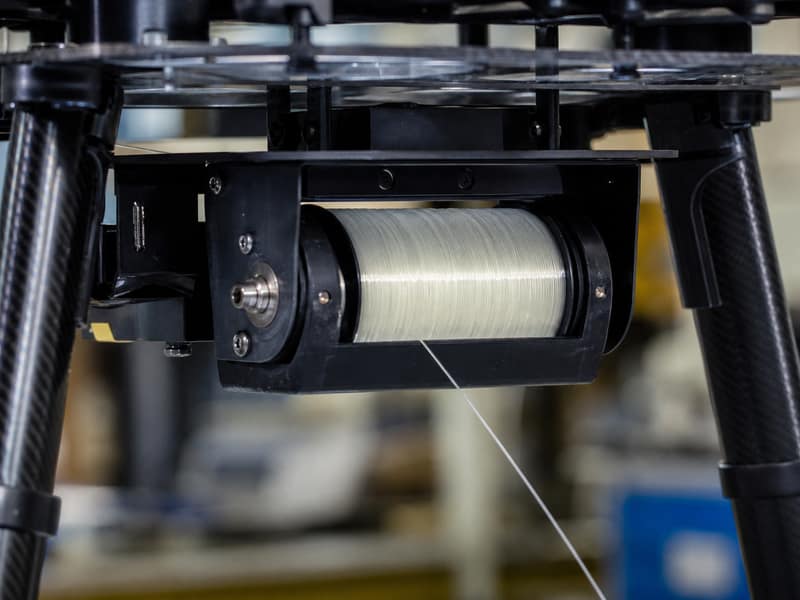
“Operators ask about camera resolution first,” one CloudWing engineer noted. “After two flights they ask about the drum. That is the correct order of learning.” A Fiber Optic Dispenser that looks compact on a datasheet still has to behave when the UAV turns, climbs, or aborts.
Treat fiber as a planned consumable
Micro-bends, scrapes, and dirty connectors accumulate. CloudWing advises a documented inspection cycle and a replacement policy matched to flight hours. For customers building kits, the dispenser, ground optics, and protective accessories should travel together so training units are not improvising interfaces on day one.
As more teams evaluate tethered unmanned systems, the discriminating questions will be mechanical: How does the Fiber Optic Dispenser for UAVs pay out? What happens on abort? Who can service it in the field? Those questions are welcome. They are how a tether becomes an operational advantage instead of a fragile experiment.