


Thermal Imaging Systems and Electro-Optical Tracking Systems for Night and Heat
Thermal Imaging Systems and Electro-Optical Tracking Systems for Night and Heat
When daylight cameras run out of contrast, Thermal Imaging Systems keep a track visible. CloudWing pairs them with Electro-Optical Tracking Systems for continuous follow.
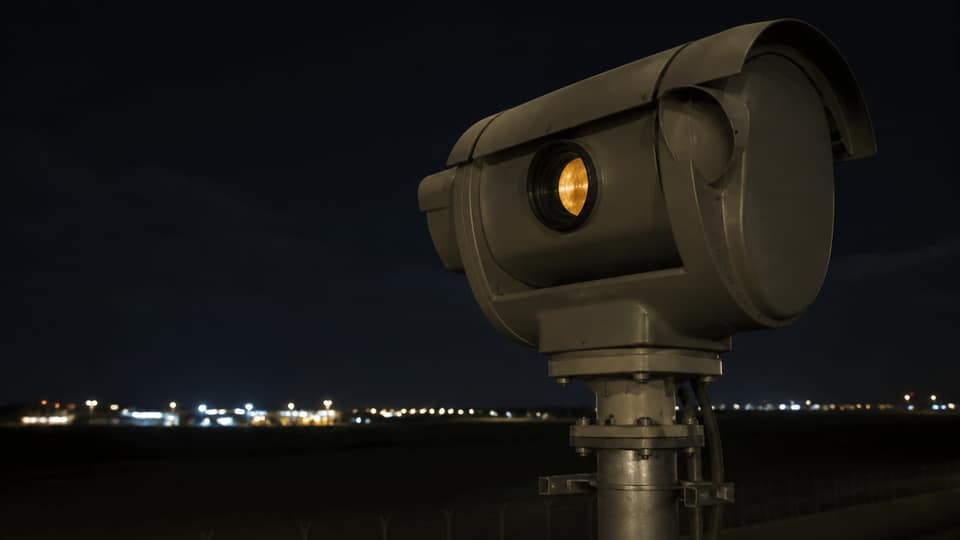
Small unmanned aircraft do not wait for sunrise. At night, or against a bright sky, a daylight camera can lose the very target radar just found. Thermal Imaging Systems restore contrast by seeing heat, not reflected light. CloudWing Defense uses them as the night and poor-visibility channel in a dual-sensor turret, not as a standalone gadget.
Seeing is not the same as staying on the target. That is why Electro-Optical Tracking Systems matter: once the operator or the cue has acquired the object, the gimbal must hold it while range, angle, and speed change. A thermal picture that drifts off a small UAV is only a brief confirmation, not a tracking capability.
CloudWing pairs thermal imagers with visible-band cameras on the same pointing assembly where the mission needs both identification in daylight and detection after dark. The operator should not be choosing which turret to wake up. One cue, one follow, two spectral channels.
Where thermal and tracking change the outcome
- Night perimeter and airfield watch
- Hot industrial sites where contrast is messy in visible video
- Keeping a small UAV in frame after a radar slew
- Evidence collection when lights are off or weather is poor
- Reducing missed confirms that cause operators to ignore later alerts
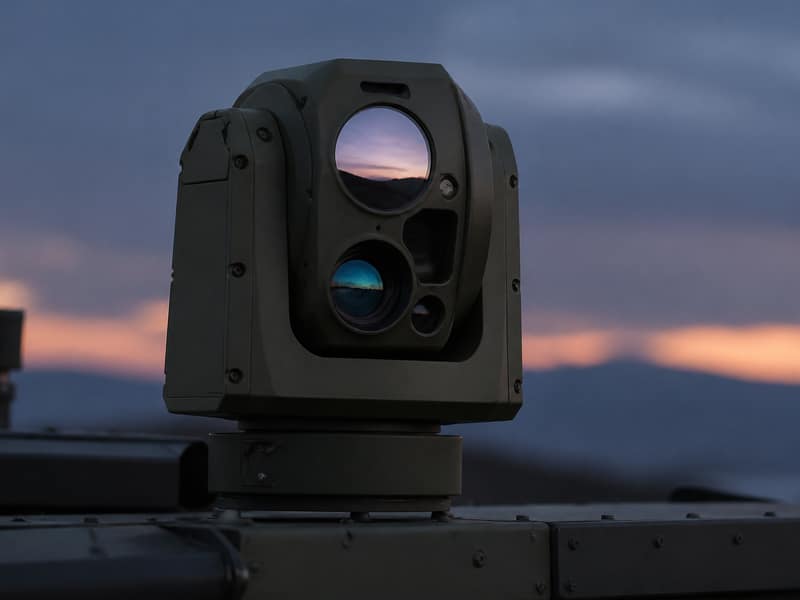
Thermal Imaging Systems have their own honesty requirements. Glass, certain materials, and heavy rain still limit performance. CloudWing documents those bounds so customers do not plan identification distances the sensor cannot support. Tracking algorithms also need a clean enough video path; a compressed, lagging feed will lose the lock even if the camera is excellent.
Specify tracking as a system, not a checkbox
When RFPs say “AI tracking” without a cue source, latency budget, or fail behavior, they are not specifying Electro-Optical Tracking Systems. CloudWing asks: Who slews first? What happens if lock is lost? How is the clip stored? Those answers belong in the design, not in a later software patch.
For sites that already have radar, adding a dual-sensor turret with thermal and tracking is often the highest-leverage upgrade. It turns an early warning into a night-capable identification loop—without pretending a daylight camera can do a 24-hour job.